Solar Panel Finance: 0% Loans, Mortgage Borrowing, Cash or Waiting for the Government Loan
Key takeaways
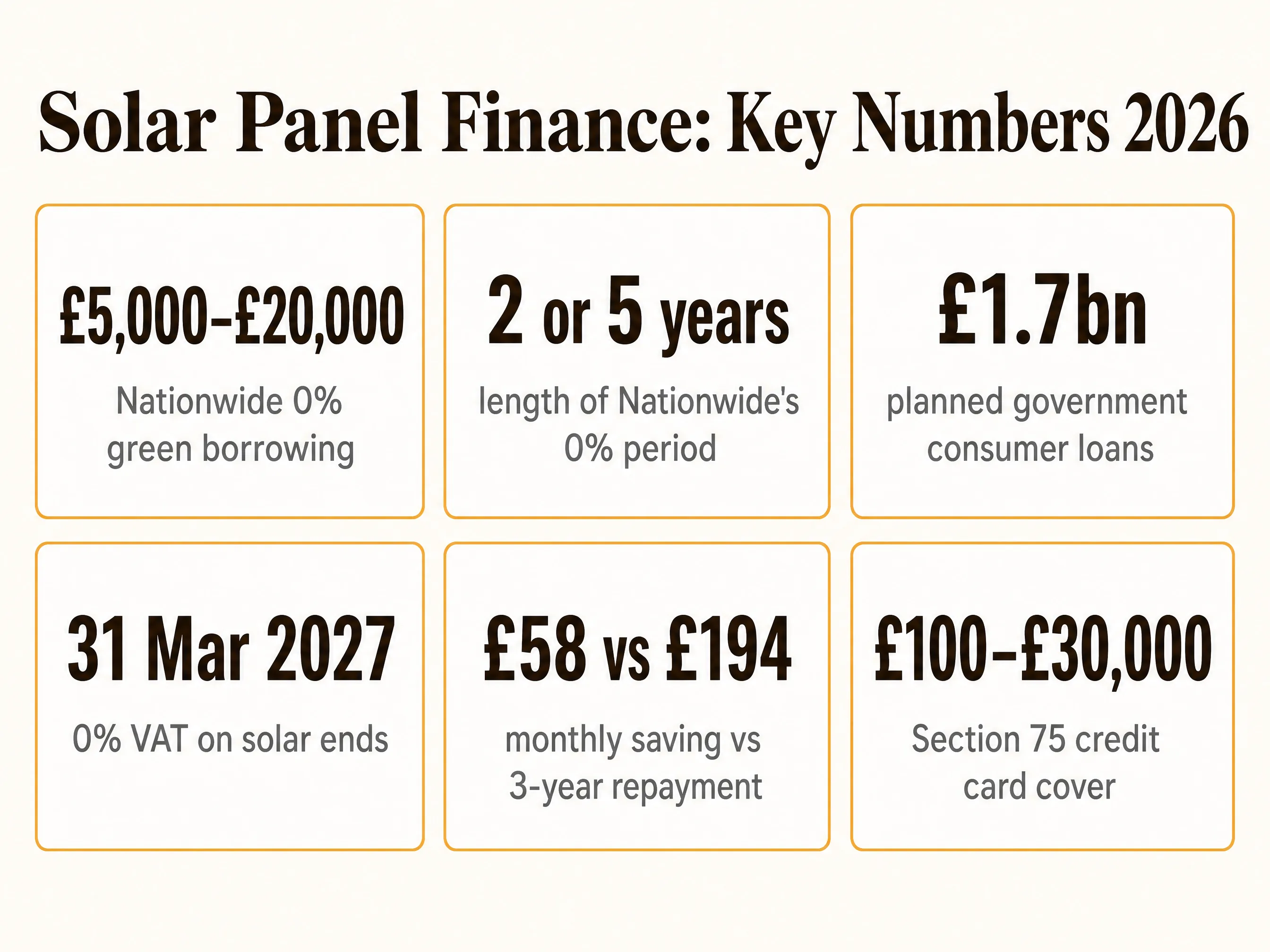
- Nationwide mortgage members can borrow £5,000–£20,000 at 0% for 2 or 5 years, after which the balance moves to its 6.49% Standard Mortgage Rate unless you switch.
- The government's Warm Homes Plan earmarks up to £1.7 billion for low- and zero-interest consumer loans covering solar and batteries.
- As of September 2026 those government loans had no confirmed launch date.
- Solar panels and batteries carry 0% VAT until 31 March 2027; after that 5% applies, adding about £350 to a £7,000 system.
- A 4kWp system in Manchester saves about £58 a month, but a £7,000 loan over 3 years costs about £194 a month, so short 0% terms mean paying more than you save at first.
- Paying even a deposit on a credit card brings Section 75 protection on purchases of £100–£30,000.
What are your solar panel finance options in 2026?
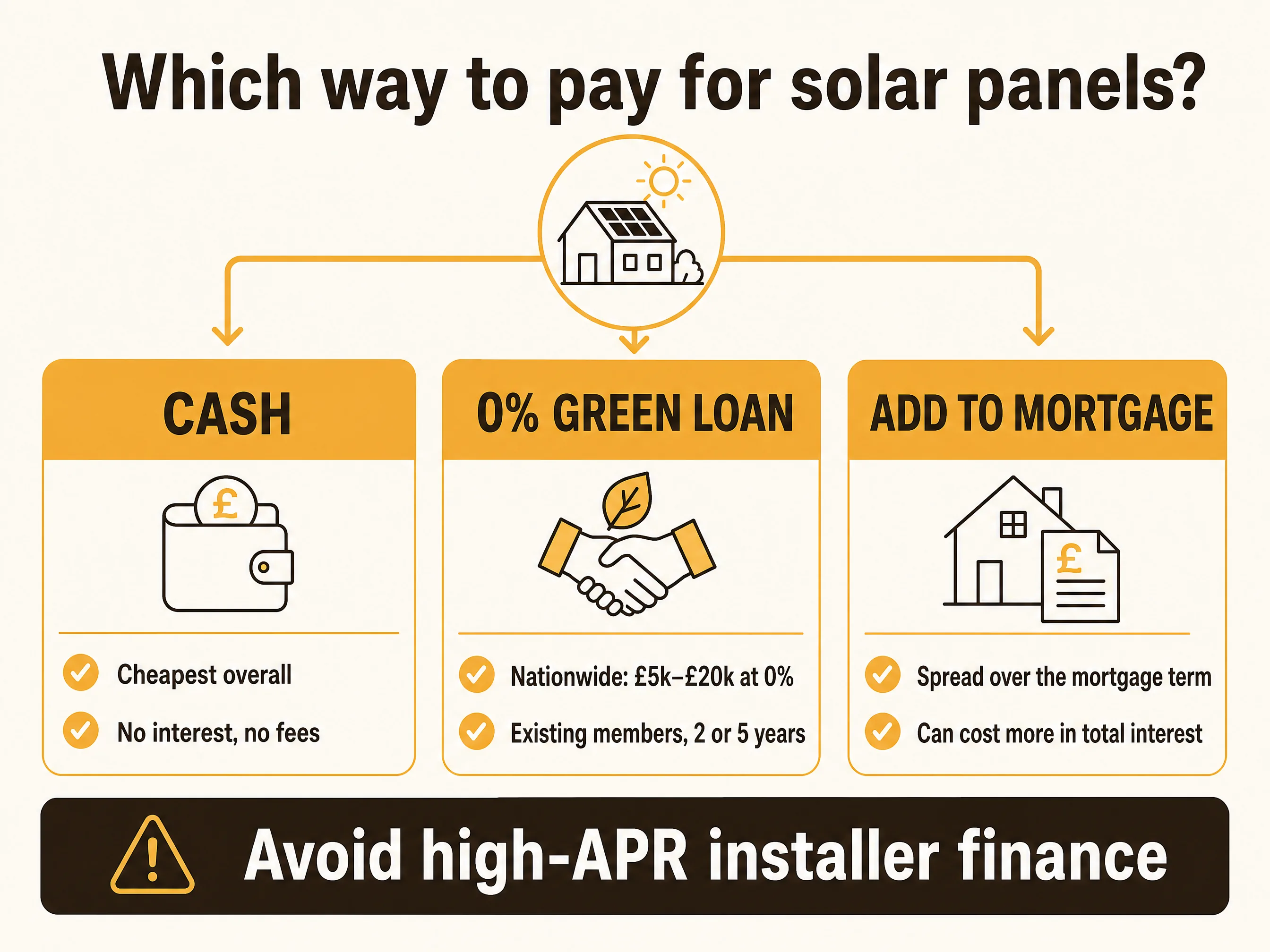
There are four realistic routes: pay cash, take the installer's finance (often 0% for a few years), add the cost to your mortgage through a green borrowing product, or wait for the government's promised low-interest loans.
Most installers and energy suppliers now offer finance. Octopus, for example, lets you spread the cost with a fixed-term loan through Zopa Bank or pay in full after installation, with a £500 non-refundable deposit either way.
Which way of paying for solar panels suits you?
Here's how the four routes compare for a typical £7,000, 4kWp system in Greater Manchester:
| Route | Interest | Monthly cost (example) | Main catch |
|---|---|---|---|
| Cash | None | £0 | Uses savings you may need |
| 0% installer finance (3 years) | 0% if genuine | About £194 | Price may be inflated to cover the finance |
| Nationwide Green Additional Borrowing (5 years at 0%) | 0%, then 6.49% SMR | About £117 over 5 years | Nationwide mortgage members only; max 90% LTV |
| Wait for the government loan | Low or 0% (not yet set) | Unknown | No launch date; 0% VAT ends 31 Mar 2027 |
Monthly figures are simple divisions of £7,000 with no fees. Compare any quote's price against the benchmark in our solar panel cost guide before you look at the finance.
Is 0% solar panel finance really free?
Only if the system price is the same as the cash price. Lenders pay for 0% offers somehow, and some installers build that cost into the quote. Ask for a cash price and a finance price side by side; if they differ, the difference is your interest.
Check the price per kWp too. A 4kWp quote well above the MCS benchmark of £1,565–£1,785 per kWp needs explaining, whether you pay cash or not. Our quote checker does the maths for you.
Will solar panel savings cover the loan repayments?
Not on a short term. A 4kWp system in Manchester saves about £698 a year, or £58 a month, on our payback calculator assumptions. Borrowing £7,000 over 3 years at 0% costs about £194 a month, so you'd be around £136 a month out of pocket until the loan is paid off.
That's the trade-off people on r/UKPersonalFinance weigh up: one poster considering a £10,000 0% loan at about £300 a month was told the maths works only if they stay in the house long enough. A longer term brings monthly costs closer to the savings, but usually at a higher rate once any 0% period ends.
Should you add solar panels to your mortgage?
It can be the cheapest borrowing available. Nationwide's Green Additional Borrowing lends £5,000–£20,000 at 0% fixed for 2 or 5 years, with no product fees, for solar panels and storage among other upgrades. You need to be an existing Nationwide mortgage member who has held the mortgage for at least 6 months, and the total can't exceed 90% of your home's value.
The catch comes after the 0% period: any balance moves to Nationwide's Standard Mortgage Rate, currently 6.49%, unless you switch product. Plan to repay or remortgage before then. Other lenders offer green mortgage incentives, so ask your own lender first.
Should you wait for the government's 0% solar loans?
Probably not. The Warm Homes Plan sets aside up to £1.7 billion for low- and zero-interest consumer loans for solar, batteries and other upgrades, but as of September 2026 Sunsave reported no confirmed launch date, rates or eligibility rules.
Meanwhile the clock is running on VAT: solar and batteries are zero-rated until 31 March 2027, then 5%. Waiting also means missing months of bill savings. Plenty of r/SolarUK readers have asked whether to hold fire for the government loan; the answer depends on whether you can afford to install now without it.
How can you protect yourself when financing solar panels?
Pay at least the deposit on a credit card. Section 75 makes the card provider jointly liable for purchases over £100 and up to £30,000, even if only part of the price went on the card. That matters if the installer later fails; see what to do if your solar company goes bust.
Read any finance agreement for early repayment terms, and check the installer is MCS-certified and backed by deposit insurance. If you might qualify for funded panels instead, check our Greater Manchester grants guide first, and consider whether a battery is worth financing too. For a cash-price quote to compare, get in touch.
Want a cash price to compare?
Ask for a quote with the cash price and finance price shown separately.
Solar panel finance: FAQs
Is 0% finance on solar panels a good idea?
It can be, if the finance price matches the cash price. Ask for both. On a short term, monthly repayments will usually be higher than your bill savings.
Can I add solar panels to my mortgage?
Some lenders allow it. Nationwide's Green Additional Borrowing lends £5,000–£20,000 at 0% for 2 or 5 years to existing mortgage members, then moves to its Standard Mortgage Rate (currently 6.49%).
When will the government's 0% solar loans start?
No launch date had been confirmed as of September 2026. The Warm Homes Plan earmarks up to £1.7 billion for low- and zero-interest consumer loans.
Should I wait for the Warm Homes Plan loan?
Only if you can't afford to install otherwise. 0% VAT on solar ends on 31 March 2027, and waiting means missing bill savings.
Do solar panel savings cover loan repayments?
Not on short terms. A 4kWp system in Manchester saves about £58 a month, while £7,000 over 3 years costs about £194 a month.
Am I protected if I pay for solar panels on a credit card?
Yes, Section 75 covers purchases over £100 and up to £30,000, even if only the deposit went on the card.
Does Octopus offer solar finance?
Yes. Octopus offers fixed-term loans through Zopa Bank or payment in full after installation, with a £500 non-refundable deposit.
Methodology
Sources
- Nationwide: Green Additional Borrowing
- GOV.UK: Warm Homes Plan (updated 18 Mar 2026)
- Sunsave: the Warm Homes Plan, is it worth waiting for? (September 2026)
- Which?: Section 75 of the Consumer Credit Act
- Octopus Energy: solar panels (finance with Zopa Bank)
- Ofgem price cap, 1 Oct – 31 Dec 2026
- The Eco Experts: solar panel cost, citing MCS data (updated 29 Jun 2026)